
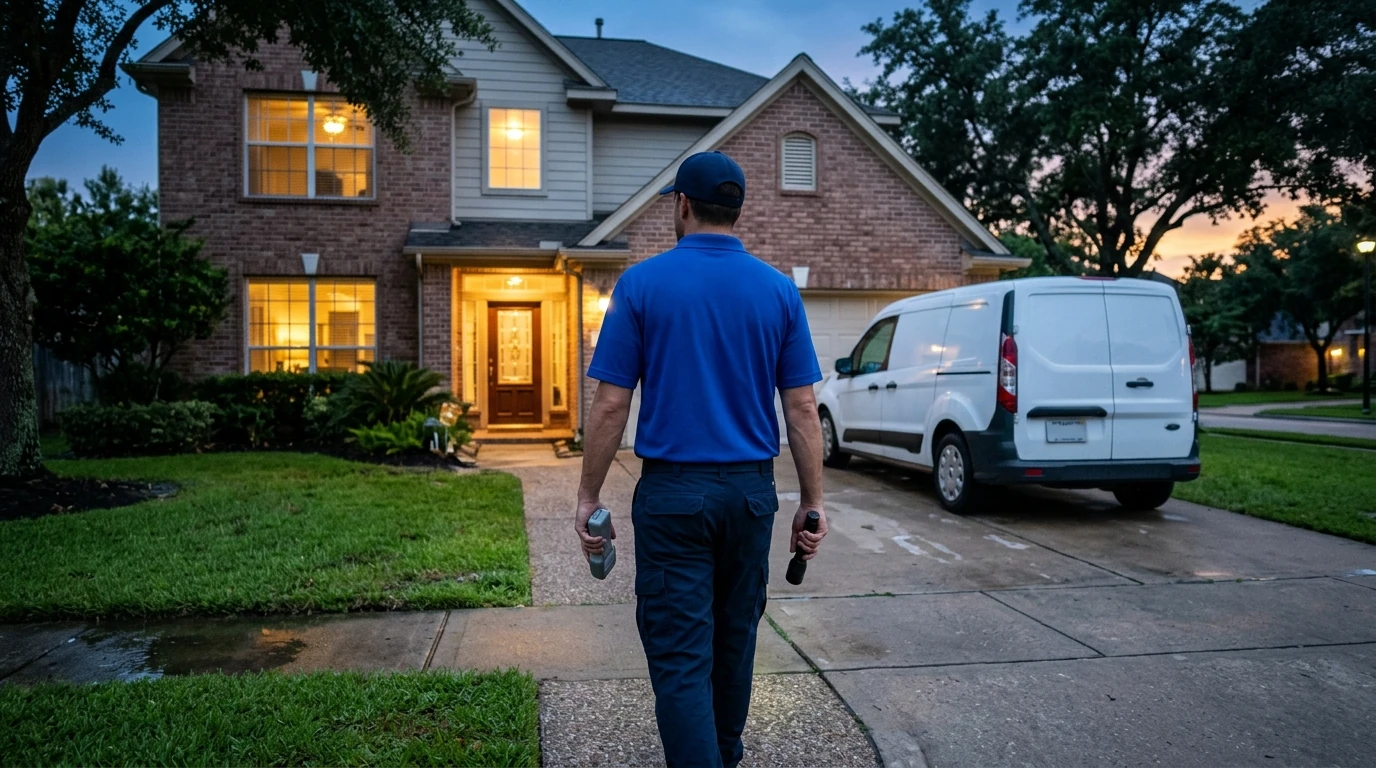
A pipe or appliance line doesn’t check the calendar before it fails. Saturday night, a holiday weekend, the middle of a work trip out of town, those are exactly when leaks tend to happen, and they’re the hardest time to manage a crisis you can’t see with your own eyes. That’s the situation one Houston homeowner, Karen, found herself in when a leak started while she was off site.
Here’s her review, in full:
“Tony Saiz did an outstanding job. Since I was off site, he kept me informed every step of the way. He also gave me the name of someone to repair the sheetrock. It was late on Saturday when the leak occurred. He came late and stayed until he was done.”
: Karen, verified Google review
Four short sentences, but they describe almost everything that separates a well-run water damage call from a bad one: communication, after-hours response, clear scope, and follow-through. Here’s what each of those actually looks like in practice.
Why communication matters most when you aren’t on site
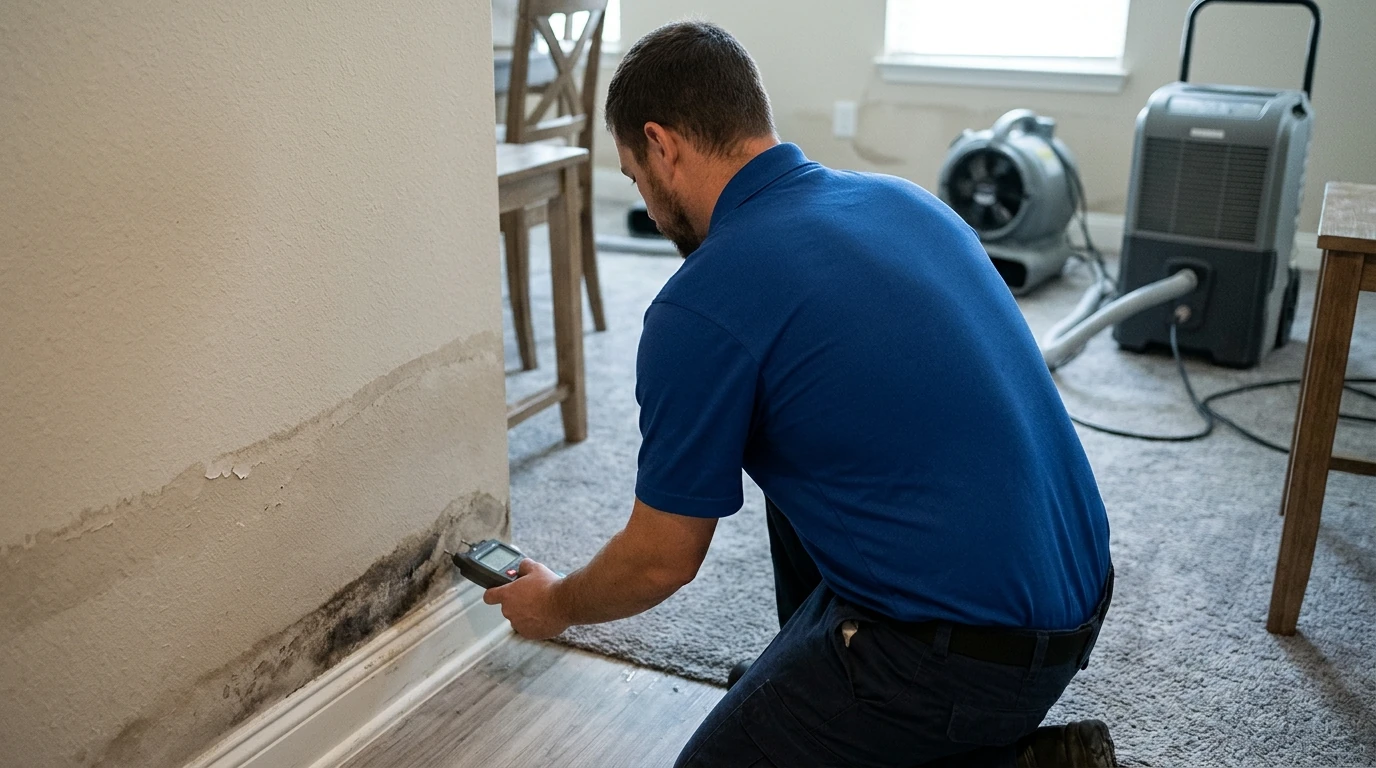
When a homeowner can’t see the damage in person, the technician’s updates are the only information they have to make decisions. That means calls or texts at the key moments: arrival, what the moisture readings show, what gets extracted or removed, and when the equipment is set and running.
For an off-site owner, that running narrative is what turns a stressful unknown into something they can actually manage, approve an insurance call, arrange a repair, or just stop worrying. A technician who documents with photos and explains readings in plain language (not just handing over a form at the end) gives the homeowner something to act on immediately, not a surprise later.
What “came late and stayed until he was done” means for a Saturday-night leak
Water damage follows a clock, not a business-hours schedule. Standing water and wet drywall start supporting growth within 24 to 48 hours according to the EPA, so the gap between when a leak starts and when extraction and drying equipment goes in matters more than almost anything else in the outcome.
A technician who responds the same night a leak is reported, and stays until the extraction and equipment setup is actually finished rather than leaving a partial job for Monday, is doing the part of the work that protects the structure most. That’s the practical reason overnight and weekend response exists as a service at all: the damage doesn’t pause for a more convenient hour.
Why the technician handed off the sheetrock repair instead of doing it himself
Water mitigation and drywall reconstruction are two different trades, and a technician who names that boundary clearly is doing the homeowner a favor, not dodging work. Mitigation means stopping the water, extracting it, and drying the structure to the point where materials are stable and safe. Rebuilding the wall, texture, paint, that’s a separate scope, usually handled by a general contractor or a drywall specialist once drying is confirmed complete.
Giving a homeowner a name for that next step, rather than leaving them to search for one mid-crisis, is a small thing that saves real time. It also keeps the invoice honest: the mitigation company bills for mitigation, the repair contractor bills for the rebuild, and nobody’s paying one trade’s markup on another trade’s work. For more on how the mitigation and insurance pieces typically separate, see what to do in the first 24 hours after water damage.
What this looks like if it happens at your house
If a pipe, water heater, or appliance line fails after hours, the sequence that matters is simple: stop the water source if it’s safe to do so, call a water damage crew that will actually come the same night, and get extraction and drying equipment running as soon as possible. Photograph the damage before anything is moved or dried, since that documentation is what an insurance adjuster will want to see later.
Most standard homeowners policies cover sudden, accidental water damage like a burst supply line, though coverage details vary by policy, so it’s worth confirming with your insurer early in the process (see the Insurance Information Institute’s overview of what homeowners policies typically cover). A written scope of the mitigation work, backed by moisture readings dried to the ANSI/IICRC S500 standard, gives you something solid to hand the adjuster.
If you’re dealing with a leak right now and not sure who to call first, who to call for water damage restoration in Houston, TX walks through the order of calls that protects both the structure and the claim.
A leak at 9pm on a Saturday isn’t a convenient time for anyone, least of all the homeowner who isn’t even home to see it. What Karen’s review describes, someone showing up, explaining what’s happening, finishing the job instead of leaving it half-done, and pointing toward the next step, is what a water damage call is supposed to look like.
About BIONIC Emergency Services
Founded in 2011, the company has handled water damage calls across the Houston area for over a decade. Technicians carry IICRC Water Damage Restoration (WRT) and Applied Structural Drying (ASD) certifications, and the company operates 24/7 for emergency response. Service covers water damage restoration, sewage cleanup, storm damage, fire and smoke damage, and contents restoration across Houston and surrounding communities including Pearland, Sugar Land, and The Woodlands.
If a leak just happened and you’re not sure where to start, Call BIONIC Emergency Services at (713) 338-2424 for an on-site assessment.