
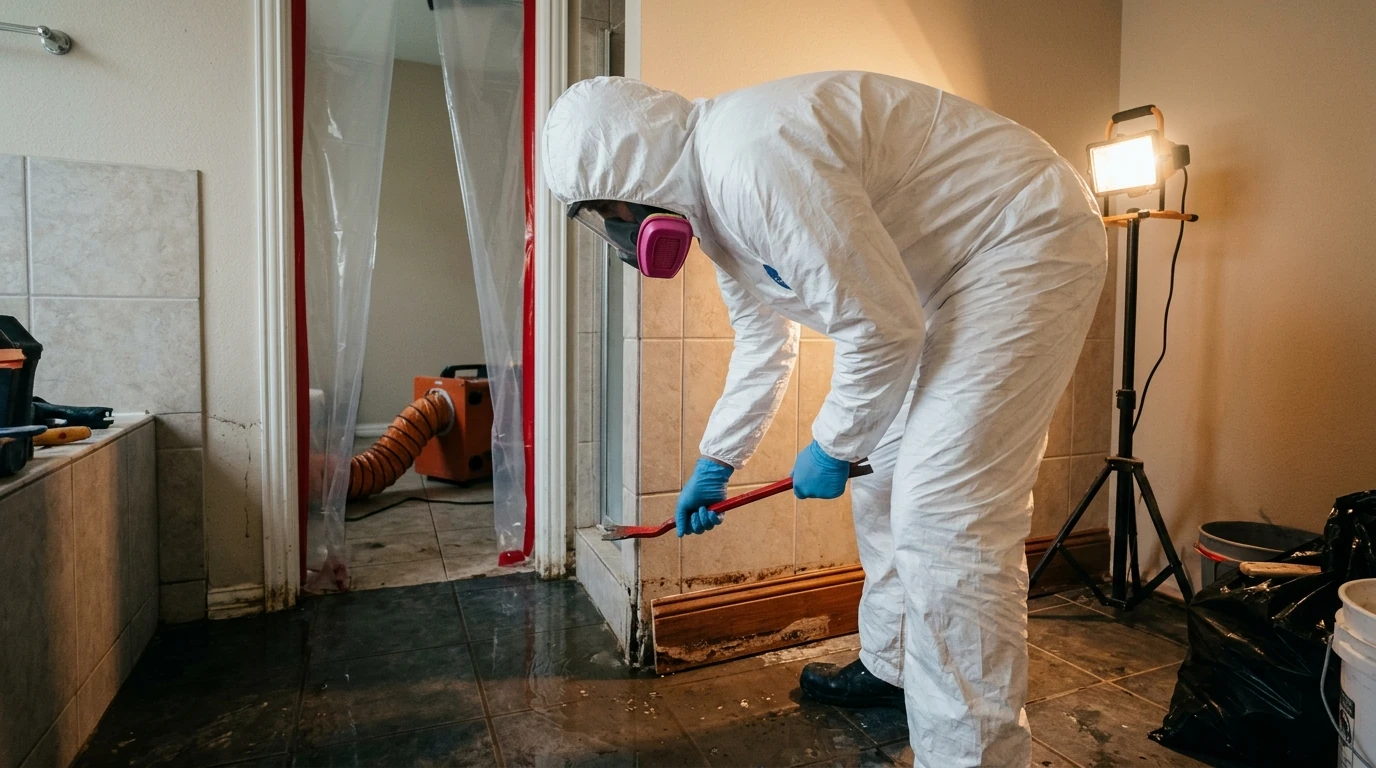
TL;DR: In Houston, sewage cleanup typically costs between $400 for a quickly contained toilet overflow and $30,000 or more for a multi-room backup that requires contents pack-out and rebuild. The biggest cost drivers are how far the water spread, how long it sat before cleanup started, and how many porous materials, carpet, drywall, cabinets, had to be removed. Most standard Texas homeowners policies only cover this if a sewer or drain backup endorsement was already on the policy.
If sewage just backed up through a floor drain or toilet in your Houston home, your first question isn’t about bacteria counts, it’s about the bill. Sewage backups are classified as Category 3 water under the ANSI/IICRC S500 standard, also called black water, because they carry contaminants that force a different cleanup path than a clean water leak. That path, removing affected materials rather than just drying them, is what separates sewage cleanup costs from a typical water damage job.
How Much Does Sewage Cleanup Cost in Houston, TX?
Most sewage cleanup jobs in the Houston area run from $400 for a small, quickly contained toilet overflow to $30,000 or more for a whole-floor or multi-level contamination that requires contents pack-out and rebuild. The total depends mainly on how far the water traveled, how long it sat, and how much porous material has to come out.
| Scenario | Typical Cost Range |
|---|---|
| Toilet overflow, caught quickly, no material loss | $400 - $1,500 |
| Single-room backup, carpet and pad removed, drying only | $2,500 - $6,000 |
| Multi-room backup with flood cuts and cabinet removal | $6,000 - $15,000 |
| Whole-floor or multi-level contamination with contents pack-out | $15,000 - $30,000+ |
| Per square foot (affected area, extraction + disinfection) | $3 - $8 per sq. ft. |
A bathroom overflow mopped up within the hour, before it soaks into subfloor or baseboards, lands at the low end. A backup that spreads from a bathroom into a hallway or bedroom and sits overnight, soaking carpet pad, drywall, and cabinet toe-kicks, pushes into the mid and upper ranges because those materials typically can’t be saved. They get cut out and replaced instead.
Houston restoration crews commonly price the cleanup phase, extraction, disinfection, and drying, in that $3 to $8 per square foot range for the affected footprint. Rebuild work (new drywall, flooring, cabinetry, trim) is priced separately once the structure is confirmed dry.
What Drives the Price Up or Down?
Four factors move a sewage cleanup bill more than anything else: how far the water spread, how long it sat before cleanup began, how many porous materials were contaminated, and whether contents need to be packed out during the repair.
- Spread and depth. A single bathroom floor is a fraction of the cost of a hallway, closet, or basement that took on standing water.
- Dwell time. Water cleaned up within 24 to 48 hours costs less to remediate than water that sat for days and pushed further into walls and subfloor.
- Porous material removal. On Category 3 losses, contaminated carpet, pad, insulation, and drywall are typically cut out, often 12 to 24 inches above the visible waterline, rather than dried in place.
- Disinfection requirements. Category 3 protocols call for antimicrobial treatment of every affected hard surface, which adds labor and product cost that a clean-water job doesn’t carry.
- Drying time and equipment. Air movers and dehumidifiers run until moisture meter readings confirm the structure is dry, sometimes a few days, sometimes longer in humid Houston conditions.
- Contents pack-out and storage. Furniture, boxes, and belongings in the affected area may need to be moved, cleaned, and stored off-site while the structure dries.
For a side-by-side look at how these same factors price out on a clean-water loss instead of a sewage loss, see our water damage restoration cost guide for Houston.
Does Insurance Cover a Sewage Backup in Houston?
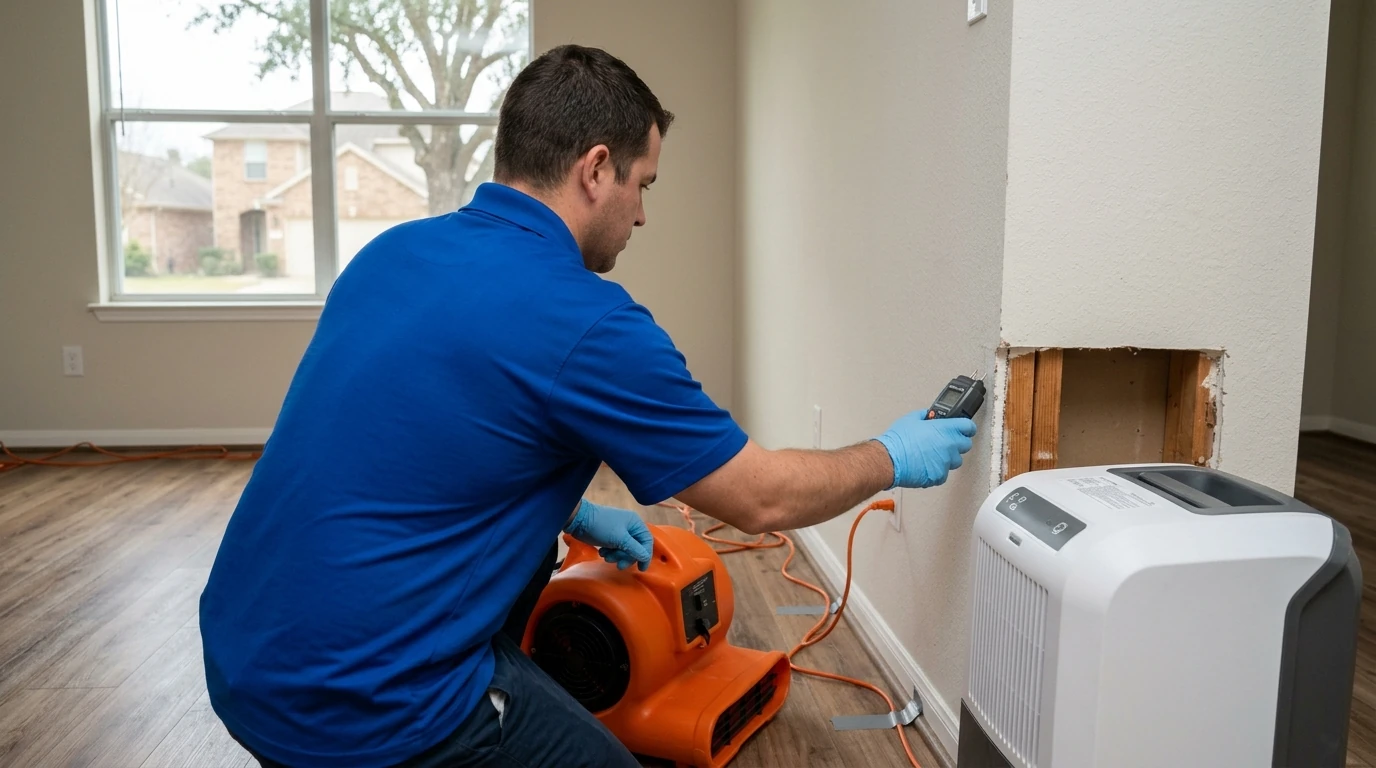
Most standard Texas homeowners policies do not automatically cover sewage backup cleanup. It typically requires a separate water backup, sometimes called sewer or drain backup, endorsement added to the policy before the loss happened. Without that endorsement on file, the homeowner is often paying out of pocket.
Standard policies generally cover sudden, accidental water damage from a source inside the home, like a burst supply line. A backup that comes up through a floor drain or toilet from the sewer system usually falls outside that base coverage. Check your policy’s declarations page for a water backup or sewer/drain backup endorsement, or call your agent to confirm. The Texas Department of Insurance is a useful resource for how homeowners coverage works in the state. Our earlier guide on whether homeowners insurance covers water damage walks through the broader coverage picture if you want more detail.
Who’s responsible for the blockage itself is a separate question from who pays for cleanup. The City of Houston owns and maintains the main sewer line up to the property connection. The homeowner owns and maintains the lateral, the pipe that connects the house to that main. If the blockage turns out to be in the city’s main line, residents can report it to the city’s public works department for repair of the main itself. Either way, the cleanup and repair work inside the home is generally the homeowner’s, and their insurer’s, responsibility, regardless of where the original blockage sat.
What Happens During a Professional Sewage Cleanup?
A professional sewage cleanup follows a set sequence: contain and assess, extract the water, remove contaminated porous materials, disinfect every affected surface, dry the structure, and verify before rebuild starts.
- Contain and assess. The source is stopped if it’s still active, the area is blocked off, and the crew traces how far the contamination spread.
- Extract. Standing sewage is pumped and extracted with truck-mounted or portable equipment.
- Remove unsalvageable materials. Carpet, pad, insulation, and flood-cut drywall sections that can’t be safely cleaned come out.
- Disinfect. Remaining structure and any salvageable contents are cleaned with antimicrobial products appropriate for Category 3 water, following IICRC S500 protocols.
- Dry. Air movers and dehumidifiers run until moisture meter readings confirm the structure has returned to a normal dry standard.
- Rebuild. New drywall, flooring, cabinetry, or trim goes back in once drying is verified.
If sewage backed up in a Houston home right now, the fastest way to get an accurate number is a free evaluation, not a guess over the phone. Call BIONIC Emergency Services at (713) 338-2424 to schedule one, or read who to call for a sewage backup in Houston if the first decision is which number to dial.
About BIONIC Emergency Services
BIONIC Emergency Services has worked Houston-area water and sewage losses since 2011, with technicians holding IICRC Water Damage Restoration Technician (WRT) and Applied Structural Drying (ASD) certifications. The company is insured and answers calls 24/7 across Houston, from Meyerland to The Heights, and into Pasadena, Pearland, Sugar Land, and surrounding communities. Crews handle water damage restoration, sewage cleanup, storm damage, fire and smoke damage restoration, and contents restoration and storage.